Slowly by Slowly
Starting a hospice for people living with HIV, and building a farm that keeps it running.
Healthcare
Each bedroom has mosquito netting, a good mattress, and a small bedside table where people keep their things. “So that it looks like home for them,” Sister Dee Smith says, walking through a room she helped build.
An HIV crisis
Sr. Dee came to Guatemala to work with Indigenous peoples. She arrived to find a country in the middle of an HIV crisis. Guatemala is the largest country in Central America, and it carries close to a sixth of the region’s HIV cases. UNAIDS estimates that 61,000 people there are living with HIV, most of them with little access to medication or treatment.
The hospice sits on the main trucking route from Central America up to Mexico, where sugar and palm oil move north in enormous lorries and the drivers stop for the night. The disease moved with them. There was no real antiretroviral program back then and no easy way to get the medicines, so people were dying in large numbers.
Sr. Dee started dreaming about a place where better nutrition and better care might prevent some of those deaths.
Keeping the doors open
Health and education don’t bring quick returns. The impact of the work isn’t immediate, Sr. Dee says, and the sisters are always raising funds. Running the hospice costs about $80,000 a year.
So the hospice grows much of what it needs. To bring in revenue, it borrowed $15,000 to buy an acre of land, and now produces food, medicines, and fertilizer to sell at local markets. Out back there are beehives and pure honey, fruit to sell, and troughs where worms compost the waste from nearby coffee plantations. The flock of laying hens has grown from 300 to 600. “That’s manageable for us in this small place,” Sr. Dee says. A neighbor comes by to buy the eggs, and some days she delivers them herself.
The organic farm is doing two jobs at once. It’s proving profitable, and the money goes straight back into the hospice’s daily costs. And the food it grows feeds the patients. Better nutrition was part of the dream from the start, and it’s why people here are doing more than surviving. They’re living full lives, despite HIV.
Annie thought there was nothing left. Now she runs the kitchen.
Sr. Dee met Annie sixteen years ago, when she came in with her three-year-old daughter, Helen. Annie’s husband had died in the hospital, and only afterward, when they tested his blood, did anyone learn he was HIV positive. Annie tested positive too.
When the hospice opened, the sisters asked if she’d like to cook, and sent her to train as a nutritionist. She runs the kitchen now, and helps the nurses plan balanced meals for the patients. This afternoon it’s tamales with chipilín and a tomato sauce to go with them.
The ripple effect
Sr. Dee trained as a teacher, and it still shapes how she sees the work. “One of the things that I think is really important is to analyze our impact on what we’re doing here. I know we’re not a big place, but because I’m a teacher, if I have a small model, I can use it as a teaching model for others.” She’s already begun teaching it beyond the hospice, with a sustainability program that shows neighbors how to grow their own crops for food and income. Nothing here moves fast. But the hens keep laying, the patients grow stronger, and people are taking hold of their own lives, figuring out how to thrive.
Be part of the next story
Every story here began with someone choosing to stand with people at the margins. Your gift helps the next one happen.
More Stories
Helping Maasai Women Build Their Own Herds in Tanzania
Sister Sue Rech, M.M.One thing that Sister Sue Rech, M.M., remembers about her path toward religious life was the desire to go to Africa. She describes her calling as faint but ever present. “After all these years,” she wrote in a Maryknoll Magazine reflection, “I...
Mission Across the Ocean
A film for the centennial of the Maryknoll Sisters’ mission in the Philippines. This oral history project tells just a few of the many stories over the 100 years of Maryknoll Sisters in the Philippines from the perspectives of some of the sisters who served there.Be...
Working for Clean Water Access in Peru
Helping Aymara communities defend their water and land against the mines, in peaceful and legal ways.When Sister Pat Ryan, M.M., learned about the contaminated water that was harming the people, animals, and vegetation in Puno, Peru, she had to do something. “It’s...
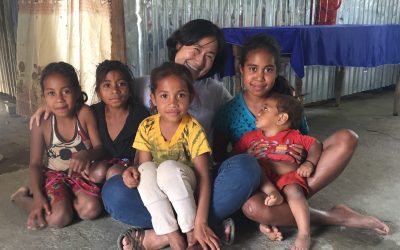
Working Together to Improve Access to Healthcare in East Timor
Sister Hyunjung Kim, M.M.For the past 10 years, Sister Hyunjung Kim, M.M., has served the people of East Timor where access to healthcare remains a daily struggle for many families living in remote mountain villages. Together with her Timorese colleagues at Clínica...