
Area of Focus
Care for Creation
When Earth is harmed, the people who depend on it are harmed first. We work to heal the two together, because they were never separate.

“Awe and wonder — that’s part of our life. With people, and with all of creation.”
— Sister Susan Nchubiri
How we see this work
We are part of Earth. When a river is poisoned or a forest is cut down, the people who live there lose their livelihood first, so we work to heal the land and the people together.
We see God revealed in creation, in a world still growing and unfolding, and ourselves as one small part of it. Over the years we have stopped thinking of ourselves as managers of Earth and come to know ourselves as part of its family.
This way of seeing came to us most from the sisters in Peru and the Indigenous peoples they walk with, whose relationship with Earth has reshaped our own. Care for creation influences our work for peace and justice and the way we walk with people on the move.
The world we hope for
Land and water are protected
Where mining, logging, and pollution threaten the land and water, we work to advocate for better care and protection, so that all life in that place can thrive.
Earth is renewed
We help renew damaged land and water, working with communities to replant forests and grow food in ways that heal the soil rather than extract from it.
People and Earth live as one
Wherever we serve, we learn from Indigenous communities who have long lived in kinship with the land. They are teaching us how to bring it, and our life with it, back to health.
How we got here
Where this work is happening
E.A.R.T.H. Commons, in Monrovia, California, is a sanctuary for integral ecology that works to regenerate land and heal our relationship with Earth. Learn more
Maryknoll Ecological Sanctuary (MES), in Baguio, Philippines, helps communities grow food and care for the land.
DHUMA, in Puno, Peru, provides legal aid to Indigenous communities defending their rights and the land they live on; founded by Maryknoll Sisters, who remain involved today.
CEDHU, in Ecuador, investigates human rights abuses and stands as a voice for women who are victimized; founded by Sister Elsie Monge, who leads it to this day.
The Network of Life (Red de Vida), in Darién, Panama, works to protect the rainforest and the people who call it home.
In Guatemala, sisters run an organic farm and nutrition work alongside people living with HIV, and share trees and kitchen gardens with their neighbors.
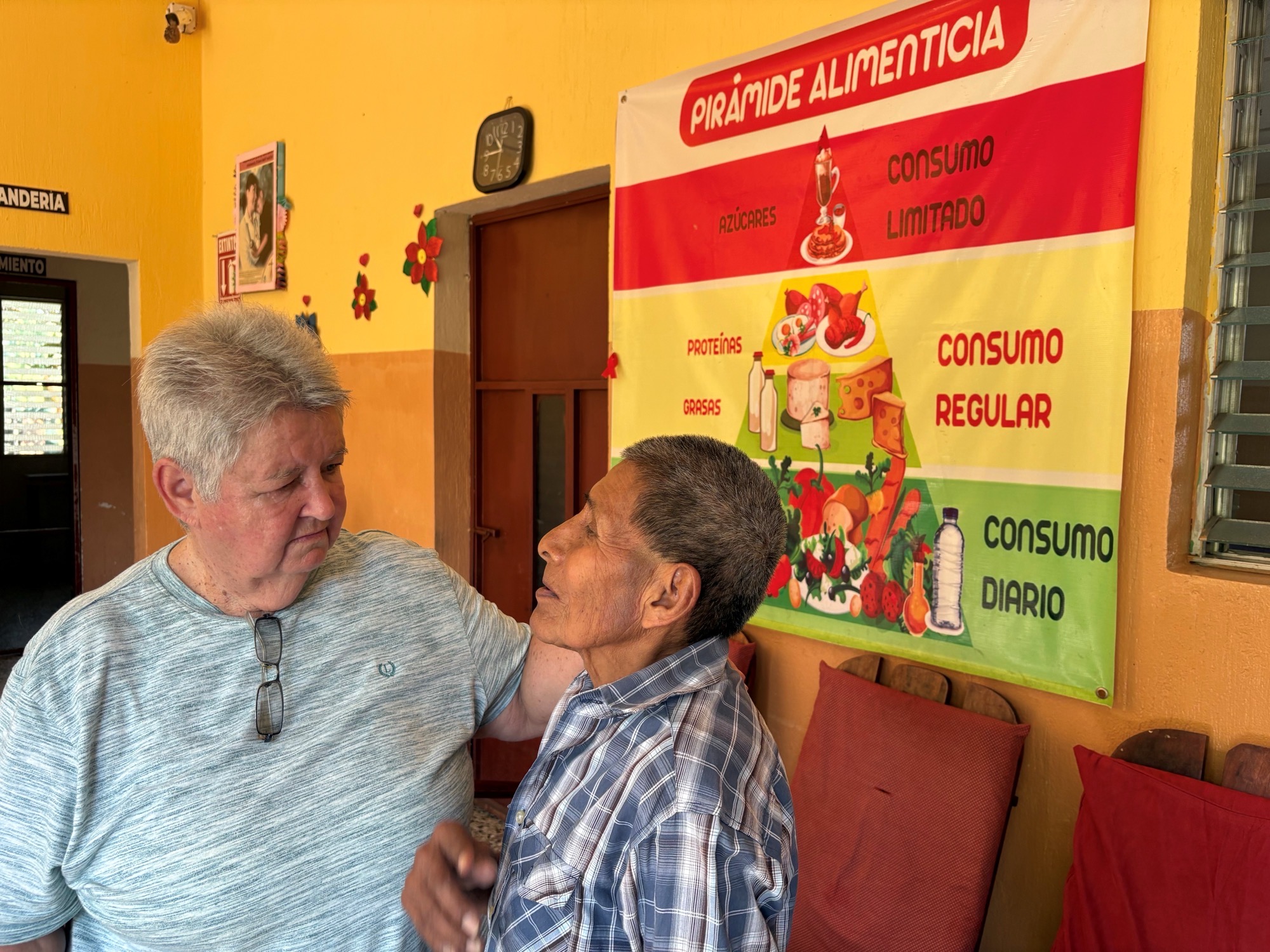
Slowly by Slowly
Starting a hospice for people living with HIV, and building a farm that keeps it running.
Walk with us
1. Fall in love with a piece of the world.
Spend real time in the natural world in some way. We won’t protect what we don’t love.
2. Find your way in.
Choose something that draws you, whether it’s gardening, tending plants, or a local group working to protect our common home, and start there.
3. Live lighter.
Take one real step to live more simply and gently on Earth in your everyday life.
4. Learn whose land you’re on.
Read about the Indigenous people who first cared for the land where you live, how they did it, and whether there are gatherings near you to take part in.
Go deeper
Learn with us
Explore integral ecology at the Maryknoll Sisters Institute for One Earth Community.
Visit the Institute →
Our Land Ethic
Our own 2006 statement on treating land as sacred, not as property.
Read the Statement (PDF) →
UN Registry of Significant Voluntary Commitments for Global Sustainability
The Earth Charter
Where “One Earth Community” comes from.
Read It →
Laudato si’
Pope Francis’s letter on caring for our common home.
Read More →
Mission & Vision
The fuller vision behind this work.
Read Our Mission & Vision →
Action Alerts
Hear from the Maryknoll Office for Global Concerns when creation and its people are under threat.
Sign Up →
Pray with us
Hold Earth and its people in prayer alongside the sisters.
Pray With Us →
Other Areas of Focus
Peace & Justice
Migration
Your gift helps heal the land and its people
Giving is one way to walk with us. Your gift helps heal the land and the people who depend on it. We’re thankful to have you alongside us.