Who We Are
The Maryknoll Sisters Institute for One Earth Community is a platform for welcoming individuals and communities to immerse themselves in evolving religious paradigms, scientific discoveries and transformational initiatives resulting in a deeper commitment to contribute to the flourishing of the whole Earth Community. Collaboratively designed programs such as virtual conferences, online webinars, and video programs enable greater accessibility. Resources created by other institutes and movements that contribute to creating the coherence needed to work together and amplify our transformative efforts will be shared through various mediums.
Our Mission
Our evolving consciousness of the cry of the earth and cry of the poor compels Maryknoll Sisters to partner with all seeking to work for justice and the thriving of all life in this one Earth Community. Trusting in the power of God to do new things, our institute seeks to explore and engage evolving paradigms and convergent efforts which sustain healing and liberating change in our world.
The Peril and Promise of AI
We are living through a technological transformation unlike anything most of us have experienced. Artificial intelligence is no longer something confined to research laboratories or science fiction. It has entered our classrooms, workplaces, hospitals, homes, churches, businesses, and governments. It can write, translate, compose music, analyze enormous quantities of information, generate images, assist physicians, tutor students, and help scientists address some of humanity’s most difficult problems. And yet, alongside this extraordinary promise comes a profound question: What kind of future are we creating?
Artificial intelligence may be one of the most consequential technologies of our time—not simply because of what machines can now do, but because AI is beginning to reshape what human beings do, how we make decisions, how we work, how we communicate, and even how we understand intelligence itself. That is why our conversation today is not simply about technology. It is about humanity.
Pope Leo XIV’s first encyclical, Magnifica Humanitas: On Safeguarding the Human Person in the Time of Artificial Intelligence, calls the Church and the world to place AI at the service of the human person rather than allowing technology to become a force of domination, exclusion, or concentrated power. Its two central concerns are protecting human dignity and agency and ensuring that AI advances truth, the dignity of work, social justice, solidarity, and the common good. Pope Leo writes it now because AI is developing with extraordinary speed and is already reshaping work, relationships, information, and power—and because, as he emphasizes, humanity is facing a pivotal choice about whether this new technology will deepen human flourishing or create new forms of inequality and domination.
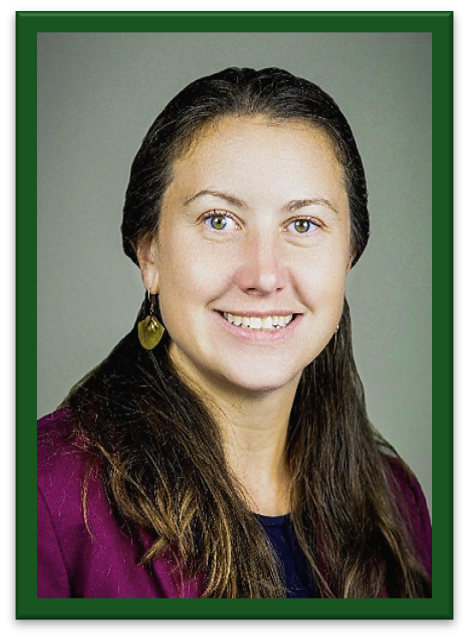 Prof. Christine Susienka is an Associate Professor at Sacred Heart University and Co-Director of the Hersher Institute for Applied Ethics. The Professor will explore with us the issues of the perils and the promise of AI from an ethical perspective. Dr. Susienka received her Ph.D. in philosophy from Columbia University in 2017. Her research focuses on the intersections of moral and political philosophy, and she is especially interested in human rights, human dignity, and the social and political conditions that make their security possible. She has presented her research at many national and international conferences and workshops including Massachusetts Institute of Technology (MIT) and at the University of Erlangen in Nuremberg, Germany. Her recent publications include: “Trust and Disruption: Securing Human Rights in a Climate Changed World,” “Hope for a Burning World: Climate Nihilism and Therapeutic Hope,” and “Bearing the Moral Weight: What’s Lost When AI Decides?” She will explore with us the risks of outsourcing moral agency and critical thinking and the risk to community and social connection that can result if AI/human relationships become more prominent. These publications focus specifically on how climate change and artificial intelligence pose threats to human rights and human dignity. In addition to addressing these themes in her research, Dr. Susienka also regularly teaches courses in Social and Political Philosophy, Happiness and the Good Life, and the Ethics of Artificial Intelligence.
Oct. 6, 2026 7:00 pm – 8:30 pm (EST) Tuesday Evening: Part 1
Oct. 13, 2026 7:00 pm – 8:30 pm (EST) Tuesday Evening: Part 2
Radical Kinship: A Christian Spirituality
Professor Rachel Wheeler
Ecospirituality has been around for centuries, but since the middle of the last century, the concept has gained increasing prominence as we’ve faced a growing environmental crisis. In her new book Radical Kinship, Rachel Wheeler uses ancient roots and contemporary theory to point readers to forward-thinking practices. With a concern for relationships among humans and what she calls “other-than-humans,” Wheeler guides us through challenging ideas and provocative actions in consideration of our interconnectedness. Using deep research and personal experience, she writes with contemplative urgency in a time of fast-paced disconnection and ecological concern.
Wheeler provides a succinct definition of ecospirituality to focus the work: “ecospirituality describes the experience of relationship with the sacred in the context of belonging within our Earth and cosmic home. Ecospirituality encompasses attitudes and practices that enliven our experience of ourselves as members of the Earth community and that activate our ability to live in a manner expressive of gratitude, respect, care, and joy. The idea of relationship to the already available sacred remains central to her thinking. We aren’t on a quest to find some distant transcendence, but we look to recognize the imminence of the sacred around us, particularly through ecological considerations.
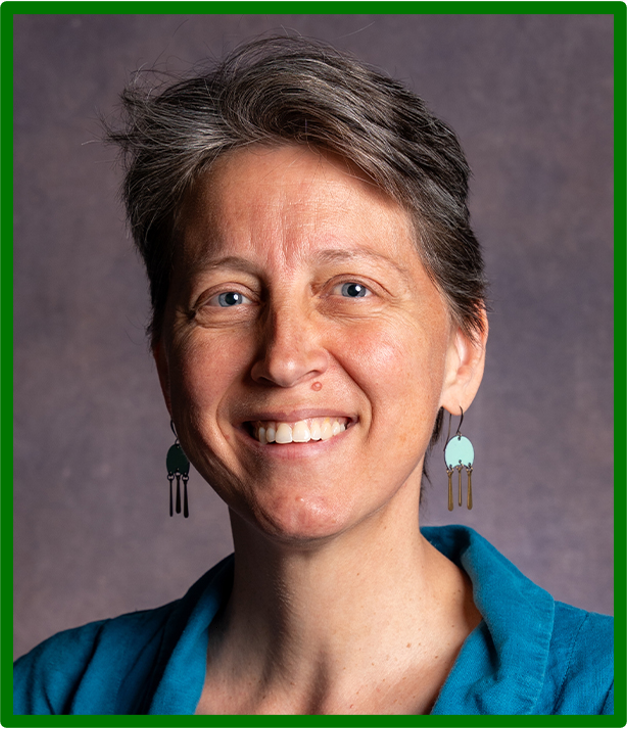 Prof. Rachel Joy Wheeler is a scholar, teacher, and author whose work brings Christian spirituality into conversation with ecological concerns, contemplative practice, and questions of human and more-than-human belonging. She is Associate Professor and Chair of Theology at the University of Portland and Director of Spirituality at the Heaven Human Earth Institute. In addition to teaching at the University of Portland, she has taught graduate courses at Saint John’s School of Theology-Seminary, the Oblate School of Theology, and the Graduate Theological Union. Her scholarship has also taken her beyond the United States: she has presented her research internationally in Johannesburg, South Africa; Kappel, Switzerland; and Rome, Italy, including presentations for the Society for the Study of Christian Spirituality.
Her invited lectures and presentations in the United States have reached audiences at institutions such as Yale Divinity School, Saint Mary’s College, Central Seminary, and the Harwood Museum of Art, as well as professional and faith-based organizations. A frequent presenter at the American Academy of Religion, Wheeler has addressed topics ranging from the early Christian desert tradition and contemplative spirituality to water crises, zero waste, ecological injustice, climate change, and practices of radical kinship.
“Radical Kinship” is a supremely wise and practical guide to “ecological conversion” for all of us who work in the area of spirituality and long to align our lives with our convictions about Earth’s current state of emergency. It is a book I will keep next to my reading chair to pick up whenever I need a nudge toward more integrity in how I share life with all my creature kin in the Earth community.” (Mary Frohlich, RSCJ)
“Rachel Wheeler has woven together a solid theological foundation for a movement that is rapidly emerging even within the Christian tradition, and the title captures the core of it. With scholarly acumen and relatable storytelling, Wheeler shows how radical kinship is more than a trendy metaphor. Rather, the practice of living in kindred relationship with all other beings is the loom itself that weaves our life together on this planet. Beyond metaphor, beyond stewardship or sustainability, not only does Wheeler draw the threads of wisdom across disciplines to rewild the Christian story; she also offers practical ways to rewild our daily lives and spiritual practices at a time when nothing is more important.” (Victoria Loorz)
November 10, 2026 Tues 7:00pm – 8:30pm
Significant Websites/ Videos for Further Study
These YouTube websites and videos have been selected as additional resources that explain how neoliberalism and laws impact ordinary people all around the globe. The issues are clearly explained and the values of the presenters’ center on the common good.
All video interviews were done in 2025 focusing on books the authors had just published.
-
David Korten: Why Monetary Reform is Essential to a Viable Human Future
A. Why Monetary Reform is Essential to a Viable Human Future
https://www.youtube.com/watch?v=_0G_7X8277Q Start 3:25 to 34:20
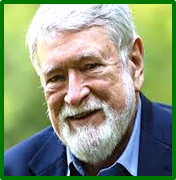 Korten holds an MBA and a Ph.D. from the Stanford University Graduate School of Business. He spent over 30 years in international development, including serving as a visiting professor at the Harvard Business School and working for the Ford Foundation and USAID in Africa, Asia, and Latin America. He also worked on the Earth Charter. He is best known for his international bestseller When Corporations Rule the World. His other books include The Great Turning: From Empire to Earth Community and Agenda for a New Economy. Korten is the founder and president of the Living Economies Forum and a co-founder and board chair emeritus of YES! Magazine, a nonprofit publication focused on sustainability and alternative economics.
In this video, David Korten clearly explains the banking system and argues a viable future requires monetary transformation—democratize the Fed, issue debt-free sovereign money, protect pensions, and end Wall Street’s debt trap—so we can fund guaranteed living-wage jobs and an ecological civilization. He outlines a four-part agenda, cites New Deal precedents and greenbacks, critiques speculative finance and UBI, and urges localization, co-ops, and clear public education to reclaim money for people and planet.
B. David Korten Explores the Vision of Ecological Civilizations
https://www.youtube.com/watch?v=_0G_7X8277Q 1 Minute 30 Sec.

An Ecological Civilization is the future that thoughtful humans envision when asked to describe the future to which they aspire. It is the future described by the Earth Charter; a document produced by the most inclusive, participatory drafting process in human experience. That future has four defining features:
- Respect and care for the community of life
- Ecological Integrity
- Social and Economic Justice
- Democracy, nonviolence, and peace.
It is within our means—if we together so chose—to create the world of material sufficiency and spiritual abundance for all that the Earth Charter describes, but time is fast running out. So, what is an Ecological Civilization? It is the future defined by the world’s people as expressed by the Earth Charter. It is the name for the future to which caring, responsible humans aspire.
American Monetary Institute https://www.youtube.com/@AmericanMonetaryInst
The American Monetary Institute (AMI) is part of a growing ecosystem of individuals, groups, and organizations dedicated to monetary reform and economic justice. The American Monetary Institute (AMI) is a publicly supported charity, founded in 1996 to present the results of our research in a manner understandable by the average citizen; leading to monetary reforms which bring forth a greater level of economic justice and a more equitable and efficient functioning of government.
This field deserves serious study because while attention is usually focused on the elections of presidents, prime ministers, and representatives, the real outcomes in society – whether there will be general economic justice or special financial privileges for the few – are often quietly determined behind the scenes by the structure of a society’s monetary system.
Monetary realities usually affect the citizen’s daily life far more than the Congress, President, or Supreme Court. AMI’s research shows that a main arena of human struggle has been over the monetary control of societies. This control is exercised through monetary theory – in obscure doctrines about the nature of money. If it had to be summarized in one sentence it is that by mis-defining the nature of money, special interests have often been able to control a society’s monetary system, and in turn, the society itself.
-
Boston College Law Professor Ray Madoff: “The Second Estate: How the Tax Code Made an American Aristocracy”
https://www.ineteconomics.org/perspectives/videos/americas-new-aristocracy 25 minutes
America’s New Aristocracy
The richest Americans control $46 trillion in wealth—but many pay little or no federal tax. Boston College Law professor Ray Madoff, author of “The Second Estate: How the Tax Code Made an American Aristocracy,” explains how a century of tax policy created two Americas: one that pays taxes and one that doesn’t.
Drawing on her new book, Madoff reveals how the wealthy use legal tools—inheritance loopholes, trusts, and philanthropy—to avoid taxation altogether. She shows how “charitable giving” often benefits billionaires more than the public, and how our tax code has quietly built an American aristocracy. Amid conflicting narratives about the drivers of wealth and inequality in the United States, one constant hovers in the background: the US tax code. No political force has been more consequential—or more utterly opaque—than the 7,000-page document that details who pays what in American society and government. Most of us have a sense that it’s an unfair system. But does anyone know exactly how it’s unfair?
Legal scholar Ray D. Madoff knows. In The Second Estate, she offers an unprecedented look behind the scenes of America’s byzantine system of taxation, laying bare not only its capacity to consolidate wealth but also the mechanisms by which it has created two fundamentally separate American societies: the working Americans who pay and the ultra-rich who benefit.
This is not a story of offshore accounts or secret tax havens. In The Second Estate, Madoff shows that the US system itself has, over time, been stripped and reconstituted such that it now offers a series of secret paths, hidden in plain sight, for wealthy people in the know to avoid taxation altogether. Through the strategic avoidance of traditional income, leveraging of investments and debt, and exploitation of rules designed to promote charitable giving, America’s wealthy do more than just pay less than their share; they remove themselves from the tax system entirely. Wealth becomes its own sovereign state, and the living is surprisingly – and maddeningly – cheap.Madoff calls for a new vision of stewardship—where wealth is once again tied to responsibility, and the public good comes before private dynasties.
Institute for New Economic Thinking: A Global Network of Innovative Scholars
https://www.ineteconomics.org/
Videos | Institute for New Economic Thinking All the Institutes videos in one place
Founded in the wake of the financial crisis in 2009, the Institute for New Economic Thinking (INET) is a nonpartisan, nonprofit organization devoted to developing and sharing the ideas that can repair our broken economy and create a more equal, prosperous, and just society. To meet current and future challenges, we conduct and commission research, convene forums for exchanging ideas, develop curricula, and nurture a global community of young scholars.
We have seen all too clearly how free market fundamentalism, fiscal austerity, financialization and corporate influence in politics have endangered economies, communities, and the planet as a whole. What is the alternative?
We need a new vision of the economy that aims to serve society. That’s why INET carefully incubates new economic thinking within the academy and beyond. We work to guide the field away from economic orthodoxy so that it can free itself of inertia and past failures. We then promote the new economic thinking we develop and support among influencers, policymakers, and the engaged public so that it can have real-world impact.
-
Busting the Bankers’ Club: Finance for the Rest of Us
https://www.ineteconomics.org/perspectives/videos/busting-the-bankers-club 18 minutes 44 sec.
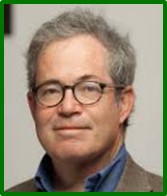 Professor Gerald Epstein, Founding Codirector of the Political Economy Research Institute at the University of Massachusetts Amherst.
An eye-opening account of the failures of our financial system, the sources of its staying power, and the path to meaningful economic reform. Bankers brought the global economic system to its knees in 2007 and nearly did the same in 2020. Both times, the US government bailed out the banks and left them in control. How can we end this cycle of trillion-dollar bailouts and make finance work for the rest of us? Busting the Bankers’ Club confronts the powerful people and institutions that benefit from our broken financial system–and the struggle to create an alternative.
Drawing from decades of research on the history, economics, and politics of banking, economist Gerald Epstein shows that any meaningful reform will require breaking up this club of politicians, economists, lawyers, and CEOs who sustain the status quo. Thankfully, there are thousands of activists, experts, and public officials who are working to do just that. Clear-eyed and hopeful, Busting the Bankers’ Club centers the individuals and groups fighting for a financial system that will better serve the needs of the marginalized and support important transitions to a greener, fairer economy.
-
The Laws of Capitalism:
All things can be Coded as Capital, with the Right Legal Coding https://www.ineteconomics.org/perspectives/videos/the-laws-of-capitalism (Trailer for Series)
 Series Featuring:
Katherina Pistor: Edwin B. Parker Professor of Comparative Law, Columbia University
Director, Center on Global Legal Transformation; Member, Committee on Global Thought
Member of the European Academy of Sciences.
- Fellow of the European Corporate Governance Institute (ECGI).
- Research Associate with the Centre for Economic Policy Research (CEPR) and the
Institute for New Economic Thinking (INET).
The Laws of Capitalism – Lectures
Lecture 1 – Coding Land and Ideas
Lecture 2 – Coding Debt
Lecture 3 – Firms
Lecture 4 – The Tool Kit
Lecture 5 – Masters of the Code
Lecture 6 – A Code for the Globe
Lecture 7 – Transforming the Code of Capital
-
Francesco Movement
Inspired by Pope Francis’ Economy of St. Francis the Francesco Collaborative gathers Catholic investors and close associates to explore practices of “faith-first investing” that nurture economic futures rooted in solidarity and embody the prophetic edge of Catholic investing. Emerging from the Economy of Francesco movement, we’ve begun to curate conversations around investing, leadership, and the solidarity economy.
Home – Francesco Collaborative
https://www.youtube.com/@francescocollaborative2
- Rethinking Economics: How Proximate Ownership Can Restore the Soul of Capitalism |
Rethinking Economics: How Proximate Ownership Can Restore the Soul of Capitalism | David Harlley
- Rethinking Philanthropy: How the Better Way Foundation Funds Indigenous Futures
Rethinking Philanthropy: How the Better Way Foundation Funds Indigenous Futures
-
Private equity’s latest victim? Your grandma’s nursing home.
https://www.youtube.com/shorts/Bc6sMzf4TN0 2 minutes 45 sec.
 Excellent explanation of how Private Equity destroys good firms for profit. Sen. Elizabeth Warren is introducing a bill into Congress to stop this devastating corporate greed. She needs our support.
Important Information
Cost of the Program
There will be no registration fee required to participate in our programs.
However, voluntary donations will be gratefully accepted to support participation in our programs.
All programs are virtual only.
Calendar For “Prophets and Mystics”
Due to popular demand, registration for the Prophets & Mystics Program has been reopened. If you would like to register today, please contact the Admissions Coordinator, Angela Abad, directly at [email protected]
Programs for 2026
|
Date |
Title |
Speaker |
|
Jan 21-22 |
Celtic Imagination: The Enchantment of the World |
John Philip Newell |
|
Feb 18-19 |
Celtic Streams: Saint Francis, Teilhard de Chardin, and Celtic spirituality have a lot in common |
Sister Ilia Delio, OSF |
|
Mar 18-19 |
Barbara Holmes: The Mystical Tradition of the African Diaspora |
Felicia Murrell |
|
Apr 15-16 |
Thomas Berry: The Eco Spiritual Priest: The Communion of All With Kathleen Deignan |
Kathleen Deignan |
|
May 20-21 |
Hildegard of Bingen: Greening Your Spirituality |
Christine Valters Paintner |
|
June 17-18 |
Etty Hillesum: Everything is Beautiful With Patrick Woodhouse |
Patrick Woodhouse |
|
July 15-16 |
Teilhard De Chardin: Lured By Love With Kathleen Duffy |
Kathleen Duffy |
|
Aug 19-20 |
Thich Nhat Hanh: The Father of Engaged Buddhism With Kaira Jewel Lingo |
Kaira Jewel Lingo |
|
Sept 16-17 |
Thea Bowman: The Franciscan Who Reawakened the Spirit of Black Catholicism With ValLimar Jansen |
ValLimar Jansen |
|
Oct 21-22 |
Edith Stein: The Saint of Empathy With Matthew Blake, OCD |
Matthew Blake, OCD |
|
Nov 18-19 |
Mother Maria Skobtsova: How a Rebel Nun Outsmarted the Nazis With Rowan Williams |
Rowan Williams |
|
Dec 16-17 |
Teresa of Avila: Holy Daring With Tessa Bielecki |
Tessa Bielecki |
The Courage to See:
Mystical Vision & Prophetic Action in Troubled Eras
In every age of upheaval, God whispers through those who dare to listen deeply.
This year-long program invites participants to stand where the mystics and prophets once stood— at the trembling edge of history—and to hear the Spirit’s quiet summons to compassion, justice, and holy imagination. Through story, shared reflection and prayer, we will awaken to the sacred call to become instruments of healing in our own wounded world.

Celtic Imagination
The Enchantment of the World
With John Philip Newell
“Wholeness consists of coming back into relationship with what is deepest in all things; that is,
the of-Godness at the heart of the earth and all life forms and all people.”
– John Philip Newell, internationally acclaimed scholar of Celtic spirituality
As we grieve the violence done to our planet, it is easy to feel overwhelmed. But what if there were tangible actions you could take to restore this rift? Beyond recycling, diet changes, and advocacy, what kind of interior changes can we make that can help us make the shift to healing? The Celts knew every chickadee and chestnut was bustling with divine presence. And they knew that humans were not lords over these lands, but a part of them.
In this masterclass, we invite you to imagine a new way of being – you’ll be immersed in a world brimming with relationships. Oneness. Communion.
Come knit your soul back into the soil in this exclusive class with award-winning Celtic teacher John Philip Newell. Together we’ll learn:
- The one radical shiftthat must occur if we are to heal the planet–and ourselves
- The Celtic method of listening to the trees, waters, and animals
- Why the way we treat the marginalizedguides the way we treat the land and waters
- 2 practices you can do todayto contribute to the healing of Earth’s sacred community.
- How an intimate relationship with the earth acts as a portal into spiritual depth


Celtic Streams
Saint Francis, Teilhard de Chardin, and Celtic spirituality have a lot in common.
With Ilia Delio, OSF
But did you know that there is a direct link to their influence upon each other?
Join the highly sought-after Sister Ilia Delio for a masterclass uncovering the Celtic threads through time! From Francis’s choir of birds to Teilhard’s cosmic mass offered upon the steppes of China, you’ll discover:
How a thrust toward union is knit into the fabric of the cosmos
- How animals experience God
- How to discover “at-homeness”in your body
- The one “stance” nature teachesus that is essential for contemplation
- The Celtic practice for opening to the beauty all around us
- Settle the controversy once and for all between theology vs. personal experience
- Where Francis was steeped in the Celtic tradition, forming the basis of his celebration of nature
- Why is the spiritual life of Earth, the ants, atoms and galaxies critical to our own spiritual lives

Barbara Holmes
The Mystical Tradition of the African Diaspora
With Felicia Murrell
Barbara Holmes was an African American scholar, mystic, and contemplative known for her work on the intersection of spirituality, race, and social justice. She integrated the wisdom of mysticism with deep insights into systemic oppression.
“Contemplation can be a source of resistance.” A grounded, inspiring activist.
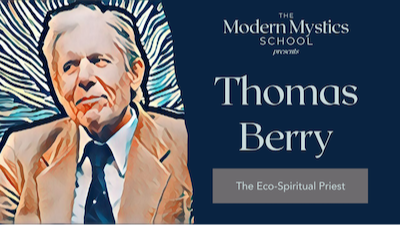
Thomas Berry
The Eco Spiritual Priest: The Communion of All
With Kathleen Deignan
Welcome to a rich encounter with one of the visionaries of this Earth moment. Sage, monk, shaman, poet, geology, path-finder and guide to a new Earth future – the world-class seer Thomas Berry embodies and teaches a way to realize our cosmic vocation by way of a New Story and an urgent summons to take up The Great Work of healing our desolating relationship with Earth by embodying a cosmology of peace.
Meet the wisdom keeper of the age to come as we practice our way into new modes of intimacy and communion with all our kin in this still unfolding, mysterious universe.
 Hildegard of Bingen
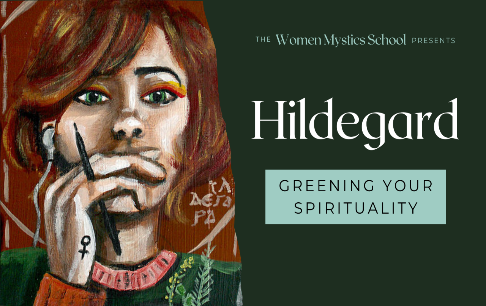
Greening Your Spirituality
With Christine Valters Paintner
You’ll never believe the things she had to endure. Hildegard of Bingen, who would go on to become one of four female doctors of the church, had an incredibly rough beginning.
She was “tithed” to the church at age 7. Her family gave her away to become an anchoress – the kind of nun who lived in a walled cell her entire life. At age 7. It began with her full funeral, complete with this child being laid in the dirt while death dirges were sung around her. She would spend the next 30 years inside that cell alongside a strict, penitential anchoress.
But that was only the beginning.
Hildegard would go on to become:
- A celebrated mystic
- One of the world’s first feminists
- A female preacher(unheard of in her times!) who relentlessly called out clergy corruption.
- Counselor of popes and emperors. Hildegard broke conventions for women of her time and fearlessly critiqued church corruption.
- She saw the sacred interconnectedness of all creation, what she called “viriditas” – the greening life force of the divine feminine.
- The mother of holistic medicine(from her convent!)
- One of the most important medieval composers (music students everywhere study her works!)
She was also the person who changed author Christine Valters Paintner’s life, and set her on the trajectory she’s on today. Join us for this class on the brilliant, insatiable Hildegard! Led by the bestselling author of The Artist’s Rule and Earth, Our Original Monastery, Christine Valters Paintner will reveal how this mystic catalyzed her own life – and how this edgy medieval woman can teach you to live out your own audacious desires!

Etty Hillesum
Everything is Beautiful
With Patrick Woodhouse
On 9th March 1941 in enemy occupied Holland, a young Dutch Jewish student began a diary that was to become one of the most remarkable documents to emerge from the Nazi Holocaust. The diary – and the letters she subsequently wrote from the transit camp of Westerbork where all the Dutch Jews were sent on their way to the death camps – tells the story of a life being transformed from insecurity and chaos to beauty and self-giving.
The class will explore Etty Hillesum’s journey of transformation, how it began through her relationship with a Jungian psychotherapist, and how a contemplative spirituality emerged in her of such depth and power that in the transit camp she became a luminous figure, alive and hopeful and, amidst so much despair and death, able to see clearly.
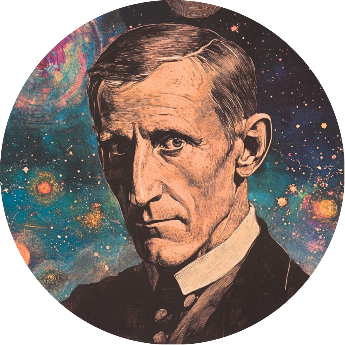
Teilhard De Chardin
Lured By Love
With Kathleen Duffy
Teilhard de Chardin was a Jesuit mystic and scientist who reconciled science and spirituality, envisioning the cosmos as a spiritual journey. “The day will come when, after harnessing space, the winds, the tides, and gravitation, we shall harness for God the energies of love.” A bold, innovative, and cosmic thinker.

Thich Nhat Hanh
The Father of Engaged Buddhism
With Kaira Jewel Lingo
Thich Nhat Hanh is widely considered the “Father of Engaged Buddhism” for his efforts in blending mindfulness practice with social action. He coined the term and established the movement during the Vietnam War, advocating for peace and nonviolence by showing that monks and nuns could actively help those suffering from conflict, rather than just meditating in monasteries.
- Mindfulness and social action:Thich Nhat Hanh believed that inner peace is directly linked to social and political change. He taught that mindfulness could be a tool for addressing suffering and injustice in the world, not just within oneself.
- Activism:During the Vietnam War, he founded the School of Youth for Social Service to help rebuild villages and support orphans, and he co-founded the Van Hanh Buddhist University in Saigon. His activism led to his exile from Vietnam in 1966.
- Peace advocacy:He famously befriended Martin Luther King Jr., who nominated him for the Nobel Peace Prize in 1967 and called him an “apostle of peace and nonviolence”.
- Founding Engaged Buddhism:He formally established the movement after being exiled, and his work continued to spread his message globally. His teachings on mindfulness and peace have been applied to a wide range of issues, including environmentalism, social justice, and racial karma.
- Lasting legacy:Thich Nhat Hanh founded the Plum Village monastic and lay community to carry on his work, which has grown into a global network of practice centers and local mindfulness groups.

Thea Bowman
The Franciscan Who Reawakened the Spirit of Black Catholicism
With ValLimar Jansen
Thea Bowman was a Franciscan sister who celebrated her African American culture and called out the US Catholic bishops to do the same. She urged them to embrace diversity, advocate for justice, and promote inclusion, urging the Church to be more welcoming to people of all backgrounds. “We must be willing to be changed by God.” A charismatic, joyful, inspiring person

Edith Stein
The Saint of Empathy
With Matthew Blake, OCD
Edith Stein was a leading Jewish philosopher turned Carmelite nun. As an atheist, she read Teresa of Avila’s autobiography through the night and in the morning declared, “This is the truth.” She wrote about empathy, suffering, and feminism. She was later killed in Auschwitz. A reflective, wise, and selfless person.

Mother Maria Skpbstova
How a Rebel Nun Outsmarted the Nazis
With Rowan Williams
Mother Maria Skobstova was a revolutionary turned Russian Orthodox nun. Became the mahor of a Russian town; narrowly escaped execution; escaped to France where she practiced radical hospitality for refugees. Later she would save Jewish children from Nazis y hiding them in trash cans. She died in a concentration camp for her courageous work. “At the last judgment, I shall not be asked whether I was successful, but whether I loved.” A bod, compassionate, unwavering human.

Teresa of Avila
Holy Daring
With Tessa Bielecki
This doctor of the church had no problem giving God a piece of her mind.
Once caught in a rainstorm to her convent, Teresa fell in the mud. Looking up at the dark heavens she yelled, “If this is the way you treat your friends, it’s no wonder you have so few!”
It’s comforting to know that holiness can have a little sass!
The first woman ever declared a doctor of the church (one of only four!), Teresa of Avila was renowned not only for reforming the Carmelite order and for writing extensively about the mystical life–but also for her wit. We will learn about the human side of Teresa – from someone not unlike her in character and vocation.
Our presenter, Tessa Bielecki, helped start a new kind of Carmelite community – one comprised of both male and female hermits. Over the decades as Mother Abbess, Tessa’s wisdom (and humor!) has impacted thousands of people. Through her life of simplicity, solitude, and stillness, Tessa has navigated the same interior depths as her namesake, Teresa.
Both women are poetic and practical, charming and disarming. What would it be like to learn about Teresa from a woman who embodies her spirit with her very life?
Join us to learn:
- What gave Teresa the chutzpahto reform a male order as a woman
- Why funis an important part of the spiritual life
- Little-known details about Teresa’s close male friendships
- How she united her poeticheart and pragmatic head
- Teresa’s remedywhen you can’t pray
Contact Information
Sister Helene O’Sullivan, Director: 914-941-0783 ext. 5671; [email protected]
Angela Abad, Admissions Coordinator: 914-941-0783 ext. 5631 (8:30 AM – 12:30 PM, Monday to Friday); [email protected]